I designed a wedding for a red alert. This is how you design systems that don’t break
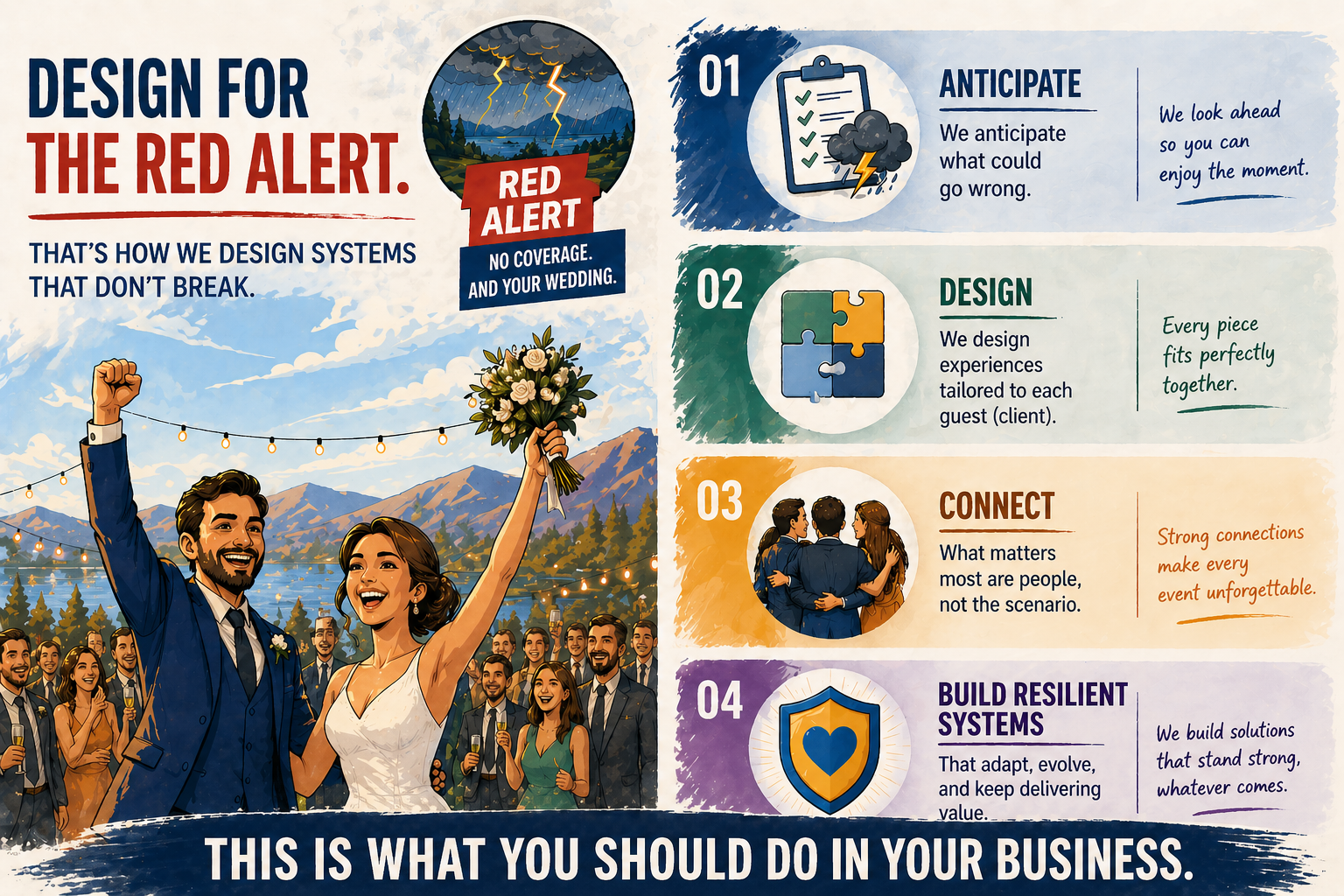
Red alert. No signal. And your wedding. This is how you design systems that don’t depend on luck.
Yes, that was the context of my wedding and even so, people left saying: “one of the best weddings, hard to beat.”
And it wasn’t because of the weather, nor the food from that year’s TOP Chef, nor perfection, but because of how we designed the experience for each guest, and they did the rest.
Organizing a three‑day wedding in four months, with August in the middle without being able to do rehearsals and with vendors closed… teaches you to breathe and to live by a philosophy.
And here, this is where, without realizing it, we were designing a Customer Success system.
We forgot about making a magazine‑worthy wedding, about getting incredible photos to make a wedding where the experience and the memories were truly the protagonists.
List of tasks to develop.
The organization of any event or task starts with the same thing: the list. And at a wedding you plan for everything that could happen. (Spoiler, everything happened to us)
- Possibility of a storm
- Problems with dress, shoes, suits, flowers,…
- Inaccessible vendors,
- Travel / Guests in an isolated village
- Last‑minute coordination of guests coming from different places, even from around the world
And did those problems surprise us? No, well, a little yes, because the day before we were under a red alert for storms and it isolated us in the village. It didn’t stress us out and now I’ll tell you why.
The rest? We knew it could happen, and since we know that there are unexpected things at every wedding, we didn’t want to risk the most important thing, the guests, so we changed the approach.
The approach that changes everything
We sat down and said to ourselves: let’s not design a wedding with the typical checklists, let’s design how we want people to experience it with us and personalize their experience.
And everything that followed stemmed from one question: 👉 What do we want our guests to remember?
From there, everything became clearer:
- We designed an experience for everyone → We didn’t organize a party for two
- We segmented guests (yes, literally): personalities, needs, relationships
- We designed the shared experience (not just tables, also accommodation): who shares space, rhythm, energy
- We chose intentional isolation: disconnection to force real connection
- We built onboarding: pre‑event website, clear context, maps, recommendations, aligned expectations
- We designed the arrival: a personalized newspaper to understand where they were and how and with whom to experience it
- We designed the departure: with a breakfast for all guests and a spectacular day, with different options for the more adventurous to keep the party going.
Because as we anticipated and were able to confirm a few days earlier, the garden and the lake views in the mountains couldn’t be enjoyed (that day), but the design and that calm made it irrelevant, because the experience didn’t depend only on that, we focused on offering guests an experience and not just “another event”.
Well, a bit of networking also came out of that wedding late at night under the starry sky, the moon over the lake, that smell of wet grass and a fireplace…. many closed the night in style. (Not everything came at the last minute ;) )
This is where your company comes in
This is exactly what many companies don’t do, neither in Marketing, nor in CS nor in Operations.
They design for the ideal scenario: perfect onboarding, expected usage, available teams. But not for reality, because reality is different: customers with different contexts, constant friction, overloaded teams, misaligned expectations
And here’s the key point: designing for what will actually happen and not just what we’d like to happen is costly. You pay for it with churn, inefficiency and burned‑out teams.
However, if you really focus on creating a customer‑centric system, this happens:
- You go from “pretty” processes → to resilient systems
- From treating everyone the same → to designing segmented experiences
- From reacting → to anticipating
- From depending on people → to building structure
Because when you truly care and design something for people, the system responds and the magic happens.
Don’t look for perfection, because if you set up a model like that… (spoiler) it’s going to break. Why not instead create systems that adapt, evolve and keep delivering value no matter what?
And what if you don’t bet on something fixed and instead focus on something that provides value and adapts and grows over time?
And you, are you designing for the ideal plan… or for how your customers will actually experience it?
Artículos relacionados